How to Tune a Ukulele to Low G
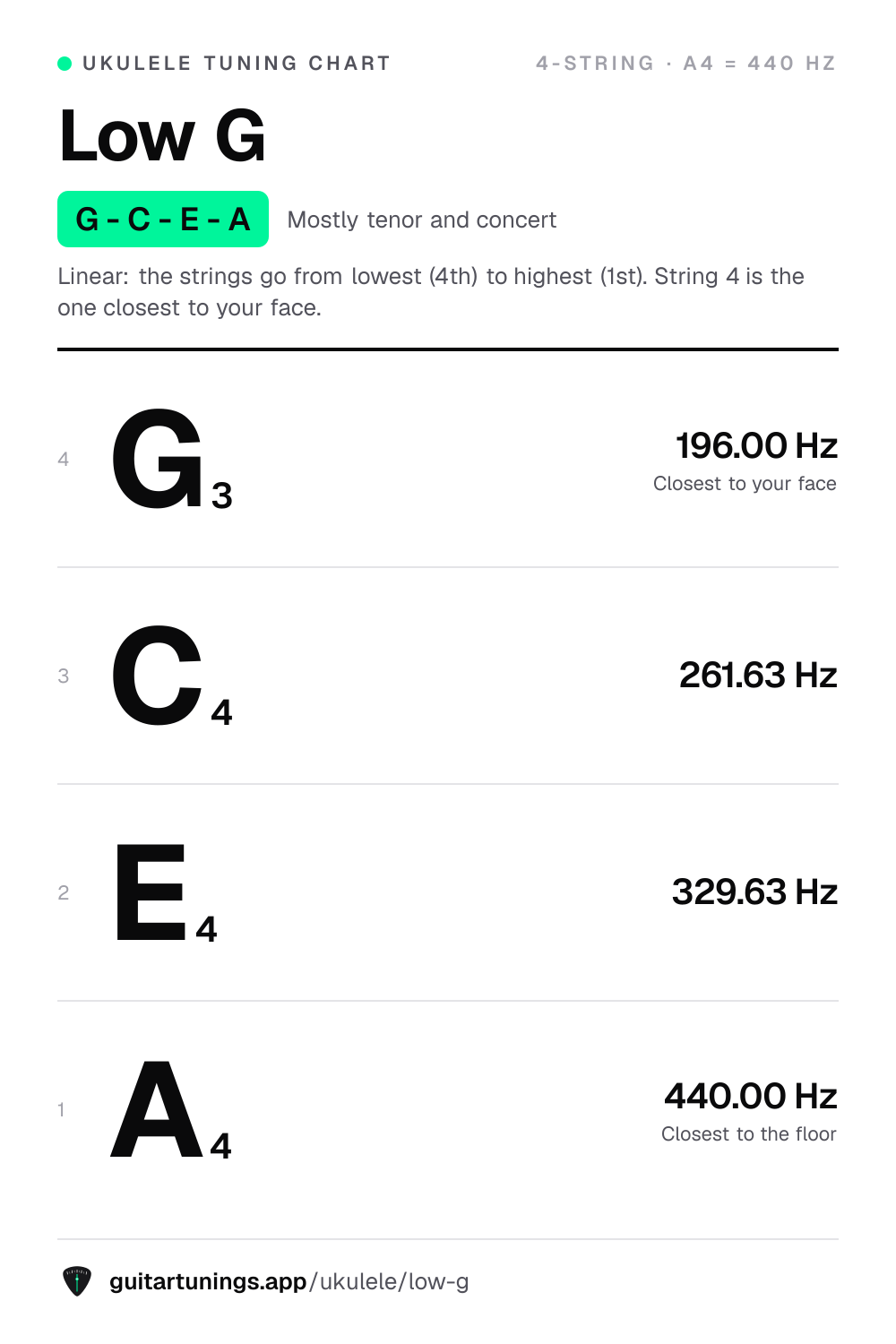
Low G tuning is G3 - C4 - E4 - A4. It uses the same note names as standard tuning, but the 4th string is tuned a full octave lower. This turns the ukulele into a linear instrument with a deeper bass note, which suits fingerstyle arrangements and melodies that run below middle C.
| String | Note | Frequency |
|---|---|---|
| 4 | G3 | 196.00 Hz |
| 3 | C4 | 261.63 Hz |
| 2 | E4 | 329.63 Hz |
| 1 | A4 | 440.00 Hz |
Used on: Mostly tenor and concert
Printable chart (PNG)Teaching a class? Free resources for teachers →
Step by Step
- Fit a low G string. A standard high G string is too thin to reach G3 and will sound floppy and buzz. Low G strings are either wound or a thicker fluorocarbon string.
- You may need to widen the nut slot slightly for the thicker string. Ask a luthier if you are unsure.
- Tune the 4th string to G3 (196.00 Hz), an octave below standard. Tune C, E and A exactly as in standard tuning.
- The tuner here is set to G3, so it will not confuse the low G with a high G one octave up.
Other Ukulele Tunings
Frequently Asked Questions
What is the difference between high G and low G?
High G (standard) tunes the 4th string to G4 at 392 Hz, above the C string. Low G tunes it to G3 at 196 Hz, below the C string. Low G adds five lower notes and a fuller sound; high G gives the traditional bright ukulele strum.
Do I need a special string for low G?
Yes. You need a dedicated low G string, either wound or thick unwound fluorocarbon. Tuning a normal high G string down an octave does not work.
Which ukulele is best for low G?
Tenor ukuleles are the most common choice because their longer scale gives the low string enough tension. Concert ukuleles work well too. On a soprano, low G often sounds weak.
Can I play standard ukulele chords in low G?
Yes. The chord shapes are identical because the note names are the same. The chords just sound deeper and fuller.